Blatrixo Machine
Blatrixo Machine
Blatrixo Machine
Explore our engineering breakthroughs in automated centrifugal wheel blasting, precision cartridge dust collection, and eco-friendly plasma/laser ablation technologies.
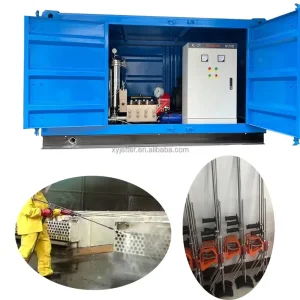
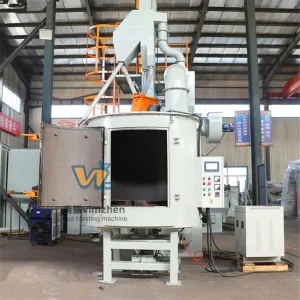

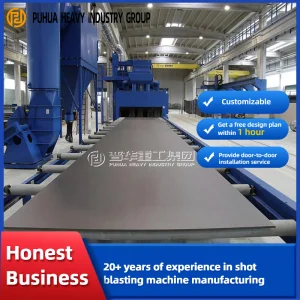
The global surface treatment industry has entered a critical phase of transformation, shifting rapidly from labor-intensive manual operations to high-throughput, closed-loop Automated Blasting Systems. This transition is propelled by three primary variables: rigorous environmental (EHS) mandates, structural integrity expectations under aerospace/automotive standards, and the industrial push for Smart Manufacturing integration (Industry 4.0).
As a leading authority in surface finish technologies, we realize that true processing optimization is not achieved through off-the-shelf machinery. We study metal fatigue prevention, coating adhesion variables, and microstructural stress distributions. Our systems ensure surface cleanliness meets global standards such as ISO 8501-1 SA2.5 and SA3, providing the structural foundation required for modern advanced coatings.
Note: Performance stats are determined based on automated closed-loop shot blasting trials utilizing high-durability chromium alloy turbine impellers under continuous multi-shift operations.
Analyzing key geo-economic transitions and technological shifts reshaping the surface engineering domain.
The decentralization of heavy manufacturing has heightened the demand for local support. Operations in the Americas, EU, and Asia Pacific require localized design modifications that comply with specific regional codes (e.g., OSHA, ATEX, CE). Manufacturers are moving away from centralized configurations toward modular installations that can be quickly commissioned and supported locally.
The integration of smart sensors into automated blasting cabinets allows for real-time monitoring of wheel speed, abrasive mass flow, and nozzle wear indicators. Industrial PLCs track system diagnostics, enabling predictive maintenance that cuts unplanned downtime by up to 45%.
Modern factories are transitioning away from manual open blasting due to strict regulations regarding particulate emissions and operator respiratory health. High-efficiency reverse-pulse dust extraction is now standard, recycling air within the workspace while isolating hazardous particulates.
Strategically located in the West Coast New Area of Qingdao, China, Ningbo Blatrixo Machinet Co., Ltd. operates at the intersection of academic research and advanced manufacturing. By leveraging the technical and talent advantages of the China Foundry and Forging Research Institute, we design, engineer, and manufacture highly specialized industrial machinery.
Our engineering philosophy is built on our core pillars: "unity, pragmatism, innovation, and integrity". Guided by our business principle of "surviving through quality and developing through integrity," we implement rigorous testing methodologies, run a highly skilled R&D team, and maintain a dedicated service ethos to deliver high-quality, cost-effective, and reliable products.
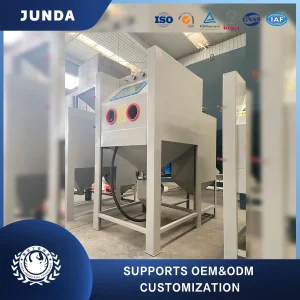
We have extensive design and practical experience in sand treatment, shot blasting strengthening, sandblasting room layout, and cylinder machinery. We specialize in customizing non-standard, purpose-built industrial machinery to meet specific customer requirements:

How our automated blasting systems solve critical surface preparation challenges across key global industries.
Pressure vessels require high surface integrity to prevent stress corrosion cracking. Our specialized gas cylinder bottom scraping and neck riveting machines integrate with blast lines to clean and finish cylinders inside and out, meeting strict transport safety standards.
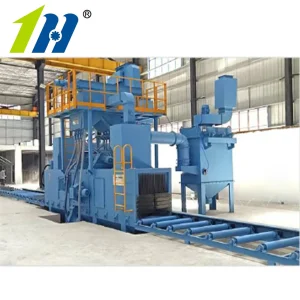
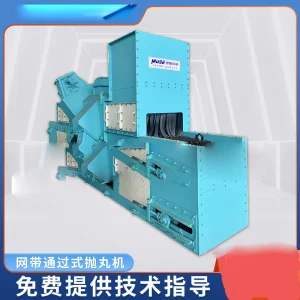
Heavy structural profiles, H-beams, and steel plates require thorough descaling before welding and coating. Our roller conveyor shot blasting machines run continuously, handling large profiles to achieve SA2.5 finish consistency.
Alloy wheels and suspension components require uniform shot peening to induce compressive residual stresses, which improves fatigue life. Our rotary table shot blasting systems process batches efficiently, ensuring consistent coverage.
Our engineering vision for the evolution of surface preparation systems over the next decade.
Developing electronic flow control valves and optical sensors that measure abrasive mix operating mixes in real time, stabilizing process outcomes and reducing media waste.
Integrating vibration sensors and thermal monitoring on blast wheels to predict bearing failures and warn operators before components fail.
Combining physical shot blasting with pulsed laser ablation and vacuum plasma technology on a single manufacturing line to address different surface prep steps in sequence.
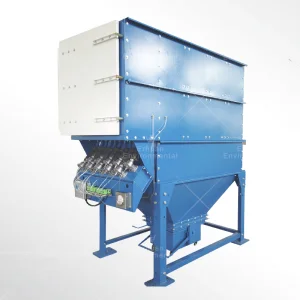
Upgrading nano-fiber cartridge filtration media and secondary HEPA containment to meet particulate emission limits under 1 mg/Nm³, facilitating air recirculation within the factory.
Answering common engineering and procurement questions about system selection, maintenance, and process optimization.
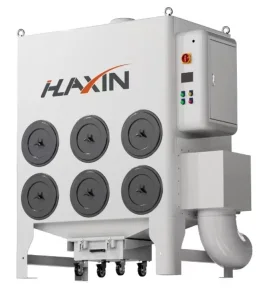
The choice depends on the dust load, temperature, moisture levels, and particulate characteristics. Cartridge dust collectors offer high filtration efficiency (99.9% down to sub-micron levels) and a compact footprint, making them ideal for dry, fine metallic dust from typical shot blasting. Flat bag dust extraction systems are better suited for higher airflows, higher moisture, and fibrous dust environments (such as in paper, cardboard, or foundry sand handling) where cartridge pleats might clog prematurely.
Consistent SA2.5 descaling (where at least 95% of the surface is free of all visible residue) relies on three synchronized factors: correct abrasive size distribution, stable blast wheel turbine speed, and controlled conveyor linear speeds. Our systems use variable frequency drives (VFDs) on the blast wheels and optical sensors to ensure consistent media flow, maintaining the target cleanliness grade even during continuous operation.
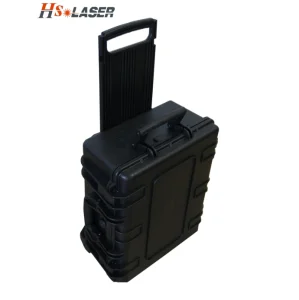
Pulsed laser cleaning (such as our 300W Precision Laser Treatment) is a non-contact, non-abrasive method. It removes oxides, coatings, and contaminants without generating dust or requiring media disposal. While mechanical shot blasting remains the standard for heavy descaling, profiling, and peening, laser cleaning is ideal for selective coating removal, precision molds, and applications where changing the base metal's roughness is undesirable.
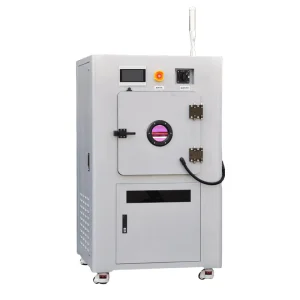
Vacuum plasma systems clean surfaces at the molecular level. By initiating a low-temperature gas plasma, organic contaminants are vaporized, and the surface energy of polymers, metals, or composites is increased. This improves the bonding strength of subsequent adhesives, paints, or coatings, making it a critical pre-treatment step for high-performance electronics and automotive components.
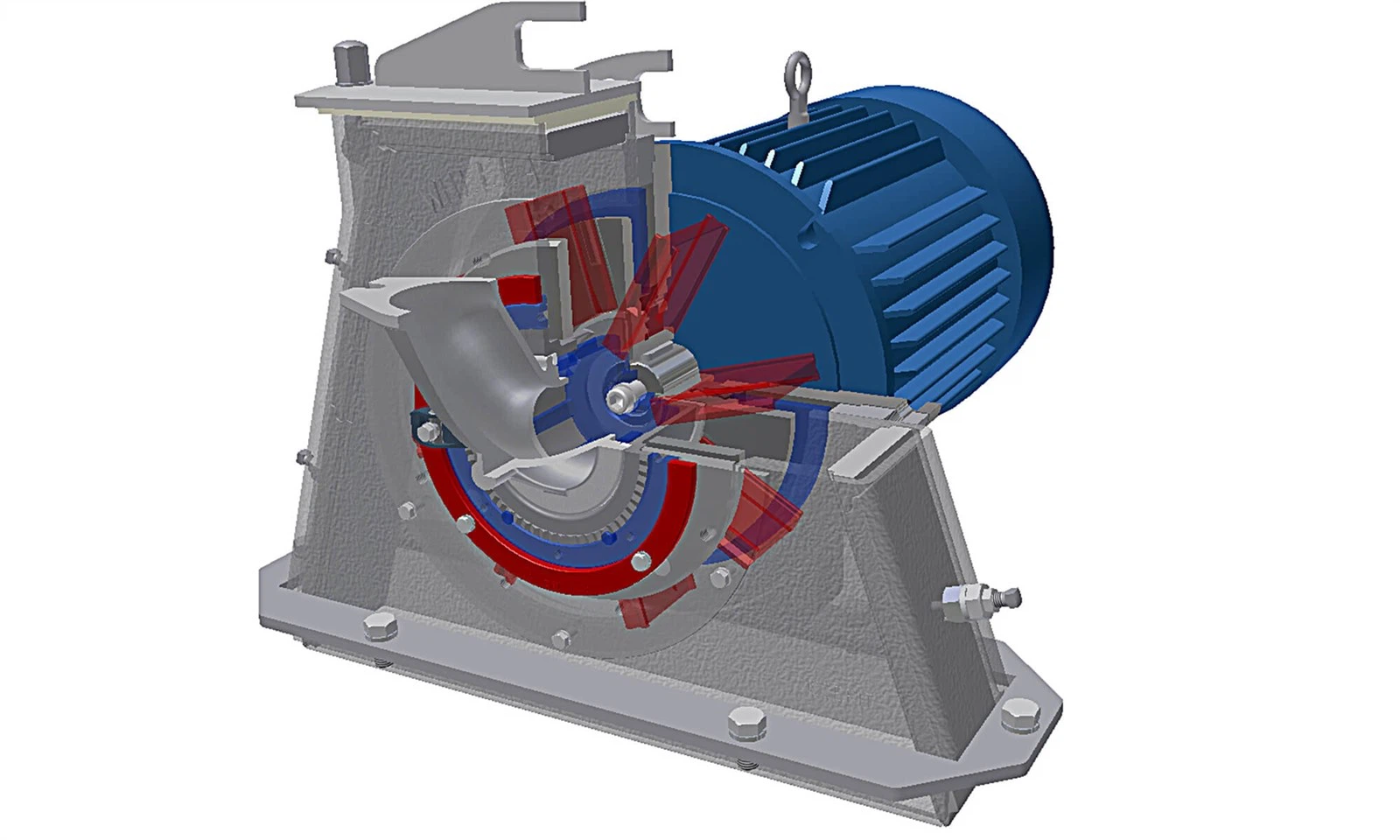
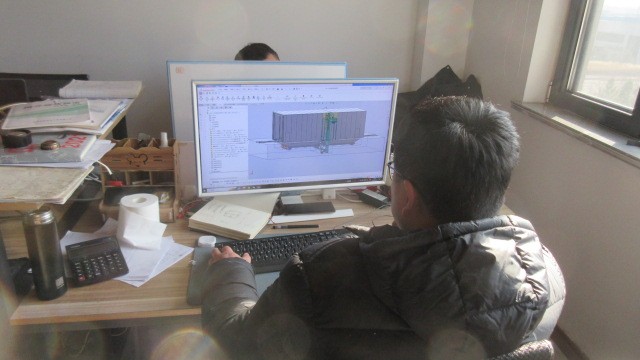
Through our collaboration with the China Foundry and Forging Research Institute, we begin with a full analysis of the customer's workpiece geometry, production rate, and floor space. Our R&D team uses 3D simulation tools to model blast wheel hot spots and wear patterns before building. This ensures that customized equipment—such as internal pipe blasters or specialized cylinder bottom scrapers—performs reliably from day one.
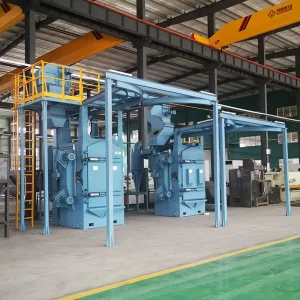
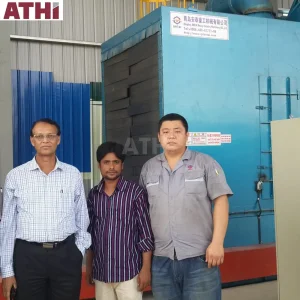
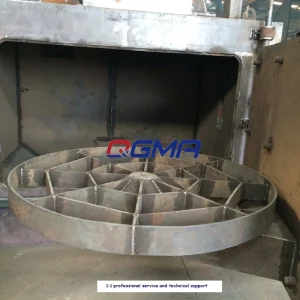
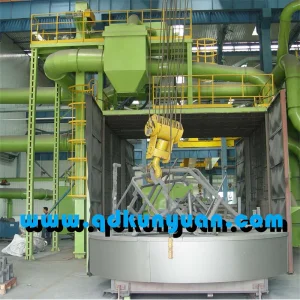
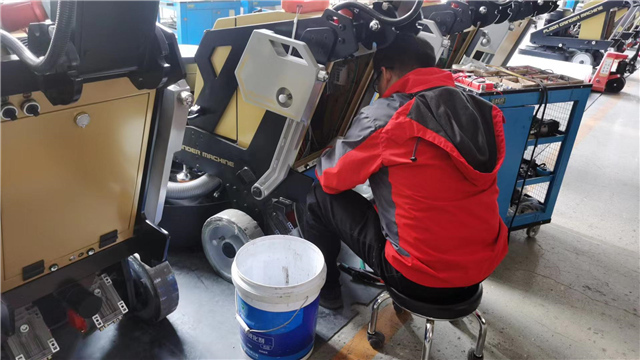
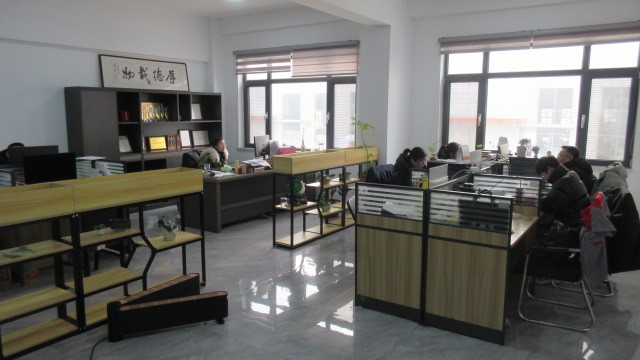
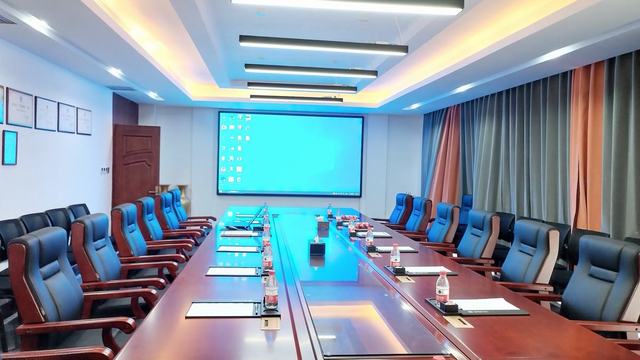
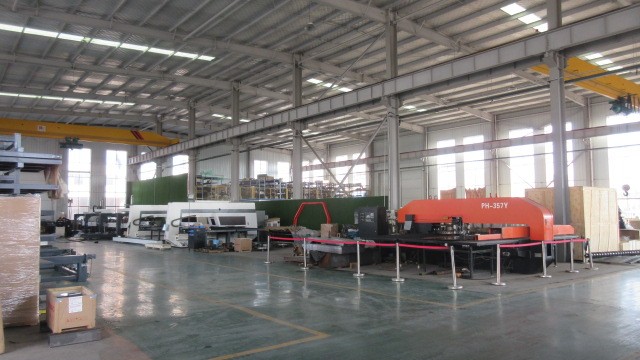
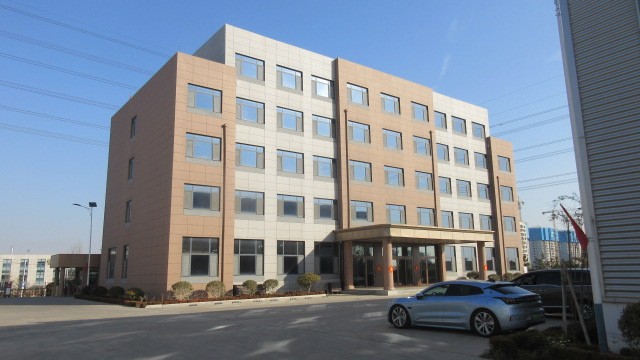
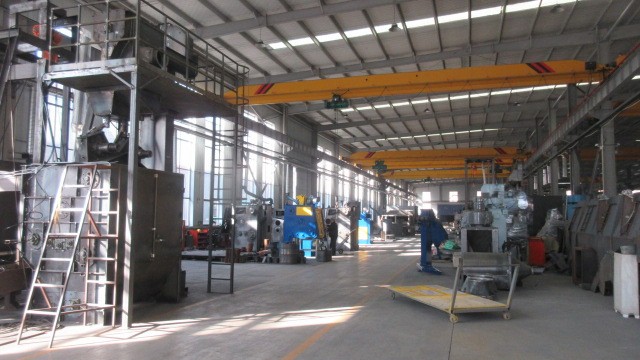
Inside our production facilities, where specialized surface treatment systems are manufactured, assembled, and tested.
Complete your surface preparation process with our specialized conveyor networks, laser systems, and custom blast tables.