Blatrixo Machine
Selecting blasting equipment is not simply a matter of choosing the largest compressor, cabinet, or abrasive recovery unit. The real question is: which factors influence equipment selection in blasting processes? Surface material, coating thickness, production volume, workspace access, dust control, operator safety, and required surface profile all matter. A steel bridge deck may need a high-throughput blast pot, while a small fabrication shop may need a compact cabinet with dependable media recovery.
Industry reports show why this decision deserves careful attention. Grand View Research estimates continued growth in the global abrasive blasting equipment market, driven by infrastructure maintenance, manufacturing, and corrosion-control projects. MarketsandMarkets also identifies automation, environmental controls, and improved abrasive efficiency as important market drivers. However, market forecasts vary. They should guide planning, not replace site testing.
Blasting engineer C. J. Konya is widely associated with a practical design principle: “The blast must be designed for the rock, not the other way around.” The same logic applies to equipment selection. Equipment must fit the substrate, not merely the contractor’s preferred brand. A 185-cfm compressor may appear adequate, yet pressure can collapse through undersized hoses, worn nozzles, or poor moisture separation. Small details matter.
This outline examines airflow, nozzle technology, abrasive type, dust extraction, automation, maintenance, lifecycle cost, and safety controls. It also questions common assumptions. Higher capacity is not always better. More automation is not always more reliable. The best selection balances measurable performance with real working conditions.
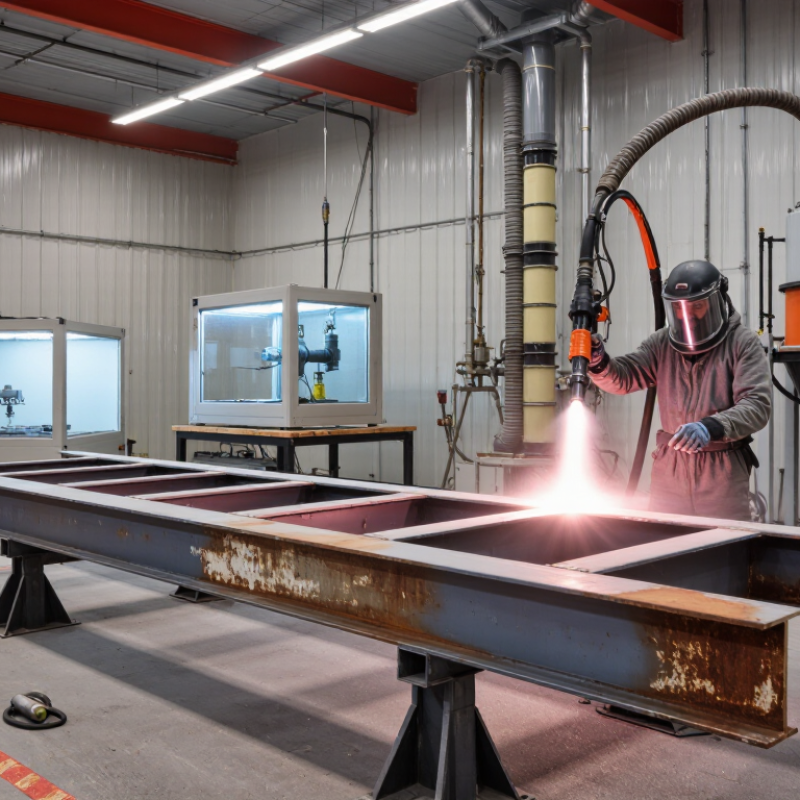
Blasting equipment selection should begin with the project, not the machine. Required surface profile, production volume, workpiece dimensions, and access conditions all influence the decision. A narrow steel frame may need a compact system, while large plates demand stable coverage and higher recovery capacity. Compressed-air pressure must remain consistent during operation. Small details matter.
Material characteristics can change the entire blasting approach. Hard steel usually tolerates more aggressive abrasive action than thin sheet metal. Cast surfaces may hide pores, sharp edges, or weak sections that need controlled treatment. Coatings also matter. A thick, brittle coating may break differently from a flexible protective layer. Temperature-sensitive materials require careful energy control to prevent distortion. The substrate decides.
In field evaluations, I compare nozzle reach, abrasive flow, dust collection, visibility, and cleanup time. I also check whether the selected media suits the material and the required finish. A machine that performs well in an open workshop may struggle around corners or enclosed sections. Test before scaling. Small trials reveal uneven cleaning, excessive media use, or operator fatigue before these issues affect the full project. My selection records include pressure readings, surface observations, and actual output rates. They are useful, but not perfect; site conditions can change during a shift, so the equipment choice should remain open to measured adjustment.
Key Factors in Blasting Equipment Selection
Selecting abrasive blasting equipment starts with the surface, not the machine. Steel, concrete, and delicate coatings require different pressure ranges and abrasive types. A heavy nozzle may remove corrosion quickly, but it can damage thin panels or nearby finishes. Match the equipment to the substrate, coating thickness, and required surface profile.
Worksite conditions also influence the decision. A small compressor may suit a repair bay, while a larger system supports continuous production. Check airflow, hose length, nozzle size, dust extraction, and electrical capacity together. Poor airflow often causes uneven cleaning and unnecessary abrasive use. In enclosed areas, effective ventilation and dust collection protect workers and improve visibility. Moisture control matters too. Wet air can clog abrasive lines and interrupt production.
Operator comfort deserves serious attention. Lighter hoses, stable controls, suitable protective clothing, and low-noise components reduce fatigue during long shifts. Equipment should also allow simple inspection and replacement of wear parts. Field experience shows that neglected seals and blocked filters create avoidable downtime. No checklist is perfect. I have seen teams choose impressive pressure ratings while overlooking maintenance access and training needs. That mistake can increase costs and reduce finish quality. Verify performance through a controlled test area, record the results, and compare them with project specifications and applicable safety requirements.
Which Factors Influence Blasting Equipment Selection?
Equipment Types and Their Suitable Applications
Blasting equipment should match the workpiece, production volume, and required surface condition. Tumble blast machines suit small, durable parts that can handle controlled movement. Cabinet systems work better for individual components, repair work, and short production runs. They provide clearer operator control around corners and recessed areas. Room systems handle oversized structures, but they require careful ventilation planning and greater space. In field evaluations, access often matters more than advertised capacity. A machine may process large parts, yet loading them safely can be difficult.
Pressure blasting systems deliver strong cutting power for rust, coatings, and heavy scale. Suction systems offer gentler, more economical cleaning for lighter contamination. Wet blasting combines abrasive media with water, reducing airborne dust and limiting heat on delicate surfaces. However, moisture can create corrosion risks if drying is incomplete. This is where selection becomes less tidy. The most powerful method is not always the most suitable one. Operators should verify abrasive compatibility, enclosure design, dust collection, noise levels, and local workplace requirements before purchase.
Tips: Test representative parts before approving equipment. Record cycle time, media use, surface profile, and cleanup effort. Inspect corners and hidden areas, not only flat surfaces. Ask operators about reach, visibility, and fatigue. A short trial often reveals problems that specifications miss. Keep the process adjustable. Real production conditions can change.
Equipment types and their suitable applications
The chart uses a comparative suitability scale from 1 to 5 based on typical operating characteristics. Pressure blast systems are commonly selected for large steel structures and heavy coating removal, while blast cabinets and automated wheel systems are better suited to contained or high-volume production work. Wet blasting and low-dust media systems are preferred where dust control or surface protection is important. Final selection should also consider substrate, coating type, required surface profile, access, media recovery, ventilation, and workplace regulations.
Blasting equipment selection is a safety decision before it becomes a productivity decision. Dust control, noise, vibration, and misfire prevention should guide the specification. OSHA’s respirable crystalline silica standard sets an eight-hour exposure limit of 50 micrograms per cubic metre, with an action level of 25 micrograms. That makes enclosed systems, wet methods, local extraction, and suitable respiratory protection practical priorities. A dry, high-output setup can look efficient on paper. That assumption is often wrong.
Environmental controls also affect equipment choice. The US EPA’s AP-42 guidance explains that abrasive-blasting emissions vary with abrasive type, surface condition, and control technology. Equipment should therefore support dust collection, media recovery, spill containment, and wastewater management. Noise needs equal attention. UK HSE guidance identifies 80 dB(A) and 85 dB(A) as exposure action values, while the 87 dB(A) limit includes protective measures. Local rules may be stricter. Regulatory permits, worker-training records, inspection intervals, and emergency shutdown systems must be checked before purchase. A missing document can stop an otherwise capable project.
Tips: Specify measurable limits for dust, noise, vibration, and water discharge. Request independent test data, not only supplier claims. Verify deadman controls, grounding, guards, and remote operation during a site trial. Keep a small contingency for monitoring and maintenance; budgets often ignore those costs. Review the selection with workers, an environmental specialist, and a competent safety professional. Their feedback may expose weaknesses that a technical spreadsheet misses.
| Selection Factor | Relevant Consideration | Indicative Data or Requirement | Equipment Selection Implication | Priority |
|---|---|---|---|---|
| Explosive Compatibility | The loading system must be compatible with the explosive type, including bulk emulsion, water-gel, ANFO, or packaged products. | Equipment should be rated for the product density, viscosity, temperature range, and loading method specified by the explosive manufacturer. | Select pumps, hoses, augers, and control systems that are specifically designed for the explosive formulation and do not introduce contamination or unsafe friction. | Critical |
| Ground Vibration | Blast-induced vibration can affect nearby buildings, utilities, tunnels, heritage structures, and sensitive industrial equipment. | Peak particle velocity is commonly monitored in millimetres per second (mm/s). Site-specific limits are normally established through structural surveys, local regulations, and project conditions. | Use equipment that supports accurate hole loading, reliable initiation timing, and controlled charge distribution to reduce excessive vibration. | Critical |
| Airblast and Overpressure | Airblast may cause nuisance, property damage, or community complaints, particularly in urban and near-residential operations. | Air overpressure is commonly measured in decibels using a linear or unweighted measurement method, depending on the applicable permit or standard. | Choose systems that enable precise stemming, consistent deck loading, and controlled initiation sequences. Include blast monitoring equipment in the selection plan. | Critical |
| Flyrock Risk | Flyrock is influenced by burden, spacing, geology, stemming quality, charge concentration, and initiation accuracy. | There is no universal safe distance; the exclusion zone must be calculated for each blast and controlled by a competent blasting professional. | Prioritize equipment that provides repeatable hole loading, accurate charge placement, reliable stemming practices, and clear operator controls. | Critical |
| Dust and Fume Control | Blasting can generate respirable dust, nitrogen oxides, carbon monoxide, and other fumes depending on geology, ventilation, and explosive performance. | Underground operations require atmospheric testing and ventilation controls. Exposure limits must follow the applicable occupational health regulations. | Consider water-spray systems, dust suppression, fume-resistant loading practices, ventilation compatibility, and remote operation where practical. | Critical |
| Noise Exposure | Noise affects workers and nearby communities and may be increased by compressors, pumps, vehicles, and auxiliary equipment. | Occupational noise programs commonly use an 8-hour time-weighted average. In many jurisdictions, an exposure level around 85 dBA triggers a hearing-conservation requirement. | Select low-noise auxiliary equipment, enclosed power units, remote controls, and monitoring devices where noise exposure is a concern. | High |
| Static Electricity and Ignition Control | Static discharge, electrical faults, hot surfaces, and unsuitable tools can create ignition hazards around explosives. | Equipment should use appropriate grounding, bonding, electrical protection, and hazardous-area controls required by the site risk assessment. | Choose intrinsically safe or suitably protected electrical components where required, with verified grounding continuity and documented inspection procedures. | Critical |
| Regulatory Compliance | Explosives storage, transport, handling, charging, initiation, and disposal are controlled by national, regional, and site-specific rules. | Examples of regulatory topics include explosives licensing, operator competency, blast plans, exclusion zones, transport documentation, inspections, and incident reporting. | Select equipment with traceable documentation, operating manuals, inspection records, safety features, and conformity certificates applicable to the operating jurisdiction. | Critical |
| Operator Training and Human Factors | Incorrect setup, charging, maintenance, or firing procedures can lead to misfires, unplanned initiation, or exposure to hazardous materials. | Operators should be trained, authorized, and assessed for the specific equipment, explosive products, and site procedures they use. | Prefer equipment with interlocks, emergency stops, clear alarms, guarded moving parts, intuitive controls, and maintenance access that minimizes human error. | Critical |
| Misfire Management | Misfires require controlled isolation, identification, waiting periods, investigation, and re-entry procedures. | Waiting times and re-entry requirements depend on the explosive system, initiation method, site rules, and applicable regulations. | Choose systems that provide charge records, hole identification, initiation traceability, diagnostic information, and secure isolation procedures. | Critical |
| Water and Ground Conditions | Wet, fractured, hot, or unstable ground can affect explosive performance and loading reliability. | Equipment selection should account for hole diameter, hole depth, water pressure, temperature, inclination, and the required loading rate. | Use water-resistant loading equipment, suitable pumping capacity, sealed connections, and monitoring systems capable of handling variable ground conditions. | High |
| Blast Accuracy and Fragmentation | Fragment size, muckpile shape, diggability, backbreak, and wall control influence downstream excavation and processing costs. | Performance is affected by burden-to-spacing ratio, stemming length, charge concentration, timing accuracy, and geological variability. | Select equipment capable of consistent dosing, accurate hole measurement, programmable initiation, and digital blast-record integration. | High |
| Remote Operation and Automation | Remote operation can reduce worker exposure in hazardous loading areas and improve repeatability. | Automation level should be matched to site connectivity, terrain, emergency procedures, operator competence, and maintenance capability. | Consider remote controls, automated positioning, electronic logging, machine diagnostics, and fail-safe shutdown functions. | High |
| Environmental Permits and Community Impact | Projects may be subject to limits concerning vibration, airblast, noise, dust, water quality, and operating hours. | Permit conditions vary by location and may require pre-blast surveys, monitoring stations, complaint procedures, and periodic reporting. | Choose equipment that supports monitoring, data export, controlled blast timing, dust suppression, and documented environmental reporting. | High |
| Energy Consumption and Emissions | Diesel-powered trucks, compressors, pumps, and generators contribute to fuel use and exhaust emissions. | Fuel consumption and emissions depend on engine rating, duty cycle, payload, idle time, terrain, and maintenance condition. | Evaluate electric or hybrid auxiliary systems, efficient pumps, automatic idle reduction, emission-compliant engines, and energy monitoring. | Medium |
| Mobility and Site Access | Uneven terrain, narrow benches, underground headings, steep ramps, and limited turning space affect equipment deployment. | Key specifications include overall dimensions, ground clearance, turning radius, axle load, gradeability, and operating reach. | Select a chassis and loading configuration that can safely access the working area without compromising stability or exclusion-zone controls. | High |
| Maintenance and Inspection | Regular inspection is essential for pumps, hoses, valves, electrical systems, brakes, grounding points, safety interlocks, and emergency devices. | Inspection intervals should follow legal requirements, risk assessments, manufacturer instructions, and site maintenance procedures. | Prefer modular designs, accessible service points, corrosion-resistant components, condition monitoring, and complete maintenance documentation. | High |
| Data Recording and Traceability | Accurate records support regulatory compliance, blast optimization, incident investigation, and environmental reporting. | Useful records include hole identification, depth, loading quantity, product type, timing plan, operator, location, weather, and monitoring results. | Choose equipment with secure digital logging, time-stamped records, calibration tracking, and exportable reports. | Medium |
| Total Cost of Ownership | Purchase price is only one part of the cost; fuel, consumables, maintenance, training, downtime, compliance, and insurance also affect lifecycle cost. | Compare expected service life, availability, scheduled maintenance hours, spare-parts requirements, energy use, and operator requirements. | Select equipment based on lifecycle performance and risk reduction rather than initial price alone. | High |
Selecting blasting equipment requires more than comparing purchase prices. Cost, maintenance, and operational efficiency must be judged together. A cheaper unit may need frequent filter changes, higher media use, or extra labor. Cheap rarely stays cheap. Experienced operators inspect total ownership costs over several years, not only the initial invoice.
Maintenance details often reveal the equipment’s real value. Check access to filters, hoses, valves, and wear plates before buying. Simple access can reduce service time and prevent rushed repairs. Downtime is expensive. A reliable maintenance schedule should include daily inspections, weekly cleaning, and recorded replacement intervals. These records support safer decisions and show whether performance is declining.
Operational efficiency depends on airflow, media recovery, control accuracy, and operator comfort. Stable airflow can improve surface preparation and reduce repeated passes. Effective recovery systems may lower waste and cleanup time. However, higher airflow is not always better; it can increase energy consumption and operating costs. My equipment assessments sometimes focus too heavily on speed. That is a mistake. Productivity should include setup, cleaning, maintenance, and rejected work. A practical comparison uses the same workload, material, operator skill, and working conditions. Measure it honestly. The most suitable system is usually the one that delivers consistent results with manageable service demands.
Safety should guide the decision before productivity. Check dust, noise, vibration, and misfire prevention. A fast system may create hidden risks. That assumption can be wrong.
Use enclosed systems, wet methods, local extraction, and suitable respiratory protection. The exposure limit is 50 micrograms per cubic metre over eight hours. The action level is 25 micrograms. Measure conditions instead of trusting appearances.
Look for dust collection, media recovery, spill containment, and wastewater controls. Abrasive type and surface condition change emissions. A tidy floor does not prove good environmental control.
Specify measurable noise limits before purchase. Exposure action values may begin at 80 and 85 dB(A). The limit can reach 87 dB(A) with protective measures. Local requirements may be stricter. Use hearing protection and verify noise during a site trial.
Review permits, training records, inspection intervals, and emergency shutdown procedures. Test deadman controls, grounding, guards, and remote operation. Missing paperwork can stop a project. Check everything before delivery.
Compare purchase price, filters, media, energy, labor, maintenance, and downtime. A cheaper unit may need frequent filter changes. Cheap rarely stays cheap. Estimate costs across several years.
Inspect access to filters, hoses, valves, and wear plates. Easy access can shorten service time. Use daily inspections and weekly cleaning. Record replacement intervals. Rushed repairs are a warning sign.
No. Stable airflow can reduce repeated passes and improve surface preparation. Excessive airflow may increase energy use and operating costs. Compare identical workloads and conditions. Speed alone is an incomplete measure.
Measure setup, blasting, cleaning, maintenance, waste, and rejected work. Use the same material, operator skill, and working conditions. Include worker feedback and safety observations. My earlier focus on speed was too narrow. Consistency matters more.
Selecting the right blasting equipment begins with understanding the project’s requirements and the material being processed. Surface type, hardness, coating thickness, workpiece size, production volume, desired finish, and available workspace all affect performance. The keyword “which factors influence equipment selection in blasting processes” reflects the need to evaluate these conditions before choosing among pressure blasting, suction blasting, wet blasting, automated systems, or portable solutions. Each equipment type offers different advantages for preparation, cleaning, finishing, or controlled surface treatment.
Safety, environmental responsibility, and regulatory compliance are also essential considerations. Operators should assess dust control, noise, ventilation, abrasive handling, protective equipment, and waste management requirements. In addition, the total cost of ownership should include purchase price, energy use, media consumption, maintenance, spare parts, downtime, and labor efficiency. A well-matched system can improve consistency, reduce operating costs, support safer working conditions, and deliver reliable results throughout the project lifecycle.
