Dust generation in abrasive cleaning operations poses significant health and safety risks. It’s crucial to explore effective strategies. Industry expert Dr. Emily Patel emphasizes the importance of dust management: “Implementing efficient dust reduction techniques can transform safety standards in abrasive cleaning.”
Abrasive cleaning can release harmful particles into the air. This creates an unhealthy environment for workers. Knowing how to reduce dust in abrasive cleaning operations is vital for maintaining a safe workspace. Proper techniques not only protect the workforce but also comply with regulatory standards.
Technologies such as wet blasting, vacuum systems, and effective PPE can significantly cut dust levels. However, some methods may require reflection and adjustment for optimal results. Understanding the unique challenges faced in different environments is key. Every operation may need tailored solutions to maximize effectiveness. Dust control is an ongoing process, and industry leaders must remain vigilant.
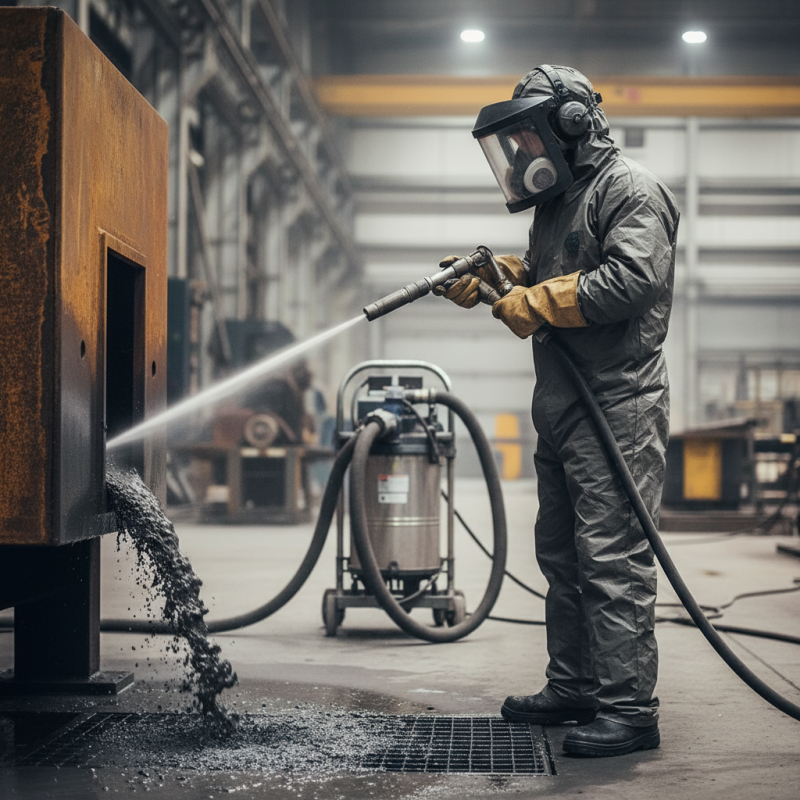
Overview of Dust Generation in Abrasive Cleaning Operations
Dust generation is a significant concern in abrasive cleaning operations. The process involves materials like sand, grit, or metal shot that can create airborne particles. When abrasive materials impact surfaces, they dislodge particles, which can become dust. This dust can affect air quality and pose health risks. Understanding how dust forms is essential for controlling its generation.
Various factors contribute to dust creation. The type of abrasive material used is one of them. Coarser materials often produce more dust than finer ones. The velocity and angle of the abrasive stream also impact dust levels. Higher speeds and sharper angles can increase dust production. Furthermore, environmental conditions, such as humidity and air movement, can influence how dust disperses in the workplace.
Effective dust control measures are needed. Wet abrasive cleaning methods can help reduce the amount of dust generated. Utilizing dust collection systems allows for the capture of particles at the source. However, these solutions are not always foolproof. Regular maintenance of equipment and workspaces is necessary to ensure efficiency. Operators must remain vigilant and adapt their methods to specific environments to achieve optimal results.
Importance of Reducing Dust for Health and Safety
Dust in abrasive cleaning operations poses serious health risks. When workers inhale fine particles, it can lead to respiratory issues. Chronic exposure increases the risk of lung diseases. Reducing dust is not just a regulatory requirement; it is crucial for maintaining a safe workplace.
Implementing effective dust control measures can be challenging. Traditional methods may not be sufficient. Using vacuum systems during cleaning can significantly lower airborne particles. However, some workers might neglect to use these tools consistently. Training is essential to ensure everyone understands the importance of using protective equipment. It can mitigate the effects of dust exposure.
In addition, regular maintenance of the cleaning equipment is vital. Dust control systems must be inspected and repaired frequently. Neglected systems can become less effective over time. Employers must encourage a culture of safety, prioritizing health over productivity. Awareness and education can empower workers to take responsibility.
2026 Best Ways to Reduce Dust in Abrasive Cleaning Operations
This chart illustrates the most effective methods for reducing dust in abrasive cleaning operations, measured by their impact on reducing airborne dust levels in micrograms per cubic meter (µg/m³).
Techniques for Dust Suppression in Abrasive Cleaning
Dust is a common issue during abrasive cleaning operations. Effective dust suppression techniques can significantly enhance work environment quality. One of the notable methods involves using water sprays. By spraying fine mist, particles settle quickly, minimizing airborne dust. This approach is practical for surfaces that can tolerate moisture.
Another effective technique is the use of dust collectors. These systems capture particles at the source, reducing dust dispersion. Proper placement near the cleaning area ensures maximum efficiency. Investing in higher-quality filtration systems can increase reliability, but initial costs may be a concern. Regular maintenance is essential for optimal performance.
Additionally, implementing work practices like controlling workflow can help. Scheduling cleanings during off-peak hours reduces dust exposure for workers and nearby residents. It is worth noting that some methods may have their drawbacks. For example, using water sprays on certain surfaces may lead to unwanted chemical reactions. Evaluating these methods carefully is essential for overall effectiveness.
Best Practices for Equipment Selection to Minimize Dust
Selecting the right equipment is crucial in reducing dust during abrasive cleaning operations. According to industry reports, over 30% of workers in this sector experience respiratory issues related to dust exposure. Proper equipment can make a significant difference, but the choices can be overwhelming.
A key tip is to use vacuum systems that have high-efficiency particulate air (HEPA) filters. These filters can capture up to 99.97% of particles and are effective in controlling fine dust. Many operations still rely on outdated models that don’t meet modern standards. This oversight can lead to increased health risks and costs down the line.
Consider the size and type of dust generated in your operation. Some conventional equipment may not be suitable for specific materials, leading to inefficiencies. Also, evaluate the maintenance needs. Equipment that is difficult to clean may accumulate dust over time, which defeats the purpose of reducing it. Making informed choices based on data and best practices can significantly enhance workplace safety and compliance.
2026 Best Ways to Reduce Dust in Abrasive Cleaning Operations
| Method |
Description |
Effectiveness (%) |
Recommended Equipment |
| Water Suppression |
Using water to suppress dust during abrasive cleaning tasks. |
80 |
Water spray systems, hoses |
| Vacuum Systems |
Deploying vacuum systems to capture dust at the source. |
75 |
HEPA vacuums, central vacuum units |
| Dust Suppression Agents |
Chemical agents to bind dust particles together. |
70 |
Spray applicators, mixing tanks |
| Enclosed Blasting |
Using enclosed systems to contain dust within a chamber. |
90 |
Blast booths, containment units |
| Proper Ventilation |
Ensuring adequate ventilation to disperse dust-laden air. |
65 |
Exhaust fans, air filters |
Innovative Technologies for Dust Control in Industry
Innovative technologies for dust control in abrasive cleaning operations have become crucial in ensuring a safe workplace. According to Occupational Safety and Health Administration (OSHA) reports, airborne dust can lead to significant respiratory issues for workers. Studies show that effective dust control measures can reduce airborne particles by up to 90%. This highlights the urgent need for industries to adopt advanced solutions.
One promising technology includes the use of wet abrasive blasting systems. These systems minimize dust generation by using water to bind dust particles, which helps maintain a cleaner environment. Additionally, a recent industry analysis found that implementing these systems can reduce cleaning time and improve surface quality.
Another method gaining traction is the use of high-efficiency particulate air (HEPA) filtration systems. These filters can capture particles as small as 0.3 microns, significantly reducing dust levels in the air.
However, the application of these technologies is not without challenges. Some companies may hesitate due to initial costs or technical complexities. Furthermore, maintenance of these advanced systems is critical to ensure their effectiveness.
Ongoing training and awareness programs for workers about dust hazards and control technologies are necessary to maximize their benefits. Adapting to these innovations requires a commitment to continuous improvement in safety and efficiency.
Conclusion
Abrasive cleaning operations are essential in various industrial processes but are often accompanied by significant dust generation, which poses health and safety risks to workers. Understanding how to reduce dust in abrasive cleaning operations is crucial for maintaining a safe work environment. Effective dust suppression techniques, such as the use of water or vacuum systems, are vital in minimizing airborne particulates.
Additionally, selecting the right equipment designed to limit dust generation can significantly enhance operational efficiency. Incorporating innovative technologies, such as advanced filtration systems and dust capture devices, can further improve dust control measures. By prioritizing these strategies, industries can effectively mitigate dust-related issues, ultimately ensuring a healthier workplace for all employees.
 Blatrixo Machine
