Blatrixo Machine
In 2026, abrasive cleaning is becoming more selective, measurable, and material-aware. The central question is simple: what materials can be treated using abrasive cleaning methods? The answer includes carbon steel, stainless steel, aluminum, concrete, brick, masonry, and some engineered composites. Each surface needs a different abrasive, pressure range, and cleaning profile.
Dr. David A. Wicks, a corrosion-control and surface-preparation specialist, states, “A clean surface is not necessarily a suitable surface for coating.” That warning matters. Steel may tolerate aggressive garnet or steel grit, while aluminum can suffer distortion, embedding, or an unwanted rough texture. Concrete may require gentle abrasive blasting to remove laitance, paint, oil stains, or weak surface layers. Brick needs careful control around soft joints and historic faces.
The details are visible on site. A rusty beam turns matte gray. A concrete floor reveals a sharper aggregate pattern. A thin aluminum panel may show rippling if the operator stays too long in one area. These results depend on abrasive hardness, nozzle distance, angle, moisture, and operator experience.
Not every material should be blasted. Glass, delicate stone, thin sheet metal, and unknown coatings may need testing first. That step can feel slow. It prevents expensive mistakes.
This guide examines leading 2026 material choices, practical limitations, and safer preparation strategies. It also recognizes an uncomfortable truth: abrasive cleaning can improve a surface while damaging it simultaneously. Reliable results require inspection, documentation, and a specification suited to the substrate.
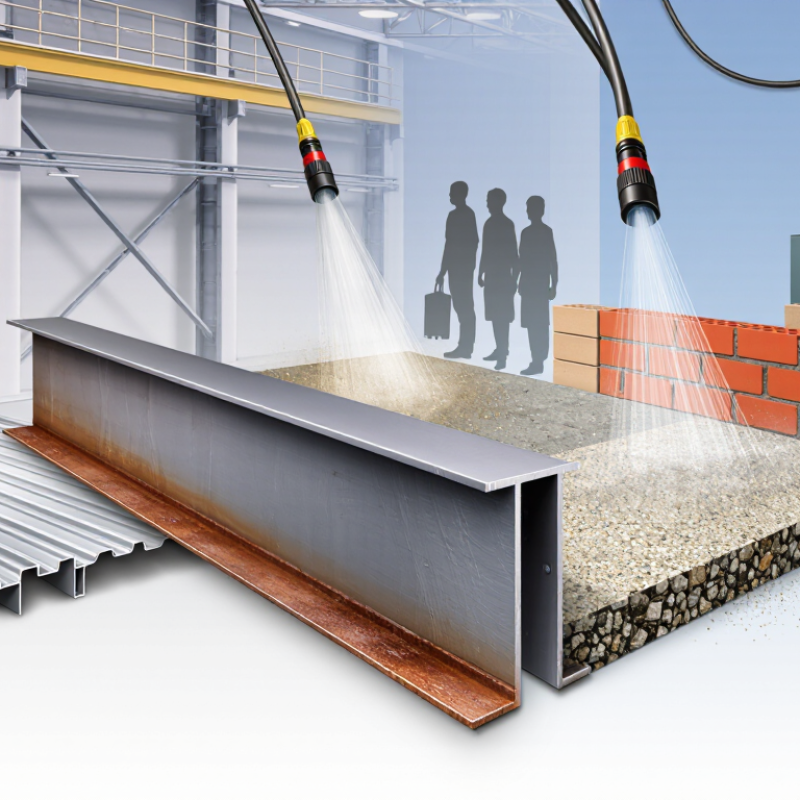
Abrasive cleaning can remove rust, old coatings, mill scale, and surface contamination from steel and selected masonry. Its results depend on pressure, abrasive media, nozzle distance, and operator control. The goal is not simply a bright surface. It is a clean, stable surface with a controlled 25–75 μm profile.
Pressure must match the substrate and contamination. Excessive pressure can create sharp peaks, embed abrasive particles, or distort thin metal. Softer media may suit delicate surfaces, while harder mineral or metallic media can cut through stubborn coatings. In practical inspection, I check the surface under angled light, then measure the profile with a suitable gauge. A rough appearance alone is not reliable. Small areas can look uniform but still vary significantly.
Tips: Test a small section first. Record pressure, nozzle distance, media type, and cleaning speed. Keep the nozzle moving. After cleaning, remove dust and inspect for flash rust or remaining coating edges. A 25 μm profile may support lighter coating systems, while 75 μm can improve mechanical adhesion for thicker systems. The correct value depends on the coating specification, not personal preference. I have sometimes selected an aggressive setting too early; the result looked impressive but required extra repair. That mistake is worth remembering.
Abrasive cleaning can remove rust, mill scale, paint, grime, and surface deposits from many materials. The correct abrasive and pressure depend on the substrate, coating, and final surface requirement. Steel usually tolerates stronger cleaning, especially on structural frames and fabricated parts. However, exposed steel can flash-rust quickly in humid air. Cleaning should be followed by suitable protection.
Aluminum needs a lighter touch. Aggressive media may leave deep profiles, distortion, or an uneven appearance on thin panels. Concrete can accept abrasive cleaning for oil marks, old coatings, and weak laitance, but porous areas may absorb contaminants deeper than expected. Stone requires careful control around edges and polished faces. A small test area reveals more than a general assumption.
Composites are less predictable. Their resin surface, fibers, and fillers can respond differently to impact and heat. Experienced technicians inspect the material, adjust nozzle distance and pressure, then compare the test area under proper lighting. Dust extraction and containment also matter, particularly indoors. Do not skip the test patch. I have seen a visually clean surface require extra repair because the cleaning removed more than the coating. That result deserves honest review before full production begins.
Abrasive cleaning can remove rust from carbon steel, stainless steel, and selected structural surfaces. In field work, operators often see orange corrosion around welds, bolts, and water traps. Properly chosen abrasive media exposes sound metal without relying on harsh chemical stripping. Rust removal is not always complete. Deep pitting may remain and require repair, measurement, or further treatment.
Mill scale, old coatings, and carbon deposits need different approaches. Mill scale can bond tightly after hot fabrication, especially along plate edges and weld zones. Controlled blasting can break this layer and create a suitable surface profile for protective coatings. Thick paint may need staged cleaning to prevent media clogging. Carbon from ovens, engines, or industrial equipment can loosen under abrasive impact, but heat-affected residues may demand slower passes. It is not a magic eraser.
Marine growth includes barnacles, algae, shells, and hardened salt deposits. Abrasive cleaning can clear these contaminants from steel, concrete, and some marine structures. Operators should remove loose growth first and inspect for hidden corrosion underneath. A small test area matters. Excessive pressure can damage thin metal, soften concrete edges, or create an uneven profile. I have seen clean-looking surfaces fail later because salts were left behind. Surface testing, dust control, and careful media selection remain essential.
Abrasive cleaning can remove rust, mill scale, old coatings, carbon deposits, and surface oxidation. The correct medium depends on the substrate, not only the contaminant. Mohs hardness offers a useful starting point, but it does not tell the whole story.
Very soft media near Mohs 2.5 can clean delicate surfaces with limited cutting action. They may suit light deposits on soft alloys, painted parts, or fragile details. Glass beads usually measure closer to Mohs 5 to 6, depending on composition and testing method. They clean and peen gently, leaving a rounded, satin-like finish rather than a deep profile. That distinction matters when preparing steel for a protective coating.
Harder mineral abrasives cut faster. Garnet commonly falls around Mohs 7 to 8, while some references describe values approaching 9. It can remove heavy corrosion and create a stronger anchor profile. However, excessive pressure can deform thin sheet metal, expose sensitive edges, or embed dust in porous materials. I have seen operators choose the hardest abrasive and finish too aggressively. That was efficient, but not always correct.
Test first.
Measure the surface profile, inspect the finish, and adjust pressure gradually. Nozzle distance, angle, moisture, and recycled-media breakdown also change performance. A softer abrasive may need more time, yet produce fewer repairs. Hardness helps predict cutting power; practical trials confirm whether the surface can tolerate it.
Abrasive selection by Mohs hardness, from softer media for delicate surfaces to harder media for heavy coating and scale removal.
Mohs hardness measures a material’s resistance to scratching. Softer media such as sodium bicarbonate and walnut shell are suited to light deposits, delicate substrates, and controlled cleaning. Glass beads provide moderate cleaning and surface finishing, while garnet and aluminum oxide are better suited to rust, mill scale, hard coatings, and intensive surface preparation. Actual results also depend on particle size, air pressure, nozzle distance, surface condition, and cleaning technique.
2026 Top Materials: What Can Abrasive Cleaning Treat?
ISO 8501-1 Sa 2½ and SSPC-SP 10 define near-white metal cleanliness for prepared steel. They are widely used before protective coating application. Abrasive cleaning can treat carbon steel plates, beams, tanks, pipes, bridges, and fabricated machinery. It removes rust, mill scale, old coatings, dirt, and weak surface deposits.
The surface must show no visible oil, grease, dust, mill scale, rust, or previous coating. Small stains, shadows, and slight discoloration may remain. A properly prepared steel surface often appears uniform gray, with a sharp, textured profile under angled light. Inspectors should check difficult areas, including weld edges, bolt holes, corners, and underside sections. These locations often retain contamination.
Sa 2½ and SP 10 are closely aligned, but project documents should define the accepted inspection method. Cleanliness alone is not enough. Surface profile, dust, soluble salts, temperature, and condensation risk also affect coating performance. A rough-looking surface can still fail if salt remains trapped. Visual judgment is useful, but not perfectly objective. Lighting, inspector fatigue, and surface color can change the result. Aluminum, stainless steel, and concrete may also receive abrasive cleaning, but these steel standards do not automatically apply to them. Softer materials need controlled pressure and suitable media, or the surface may become damaged.
| Material or Surface | Typical Contamination or Coating | Suitable Abrasive Cleaning Approach | Recommended Surface Condition | Typical Surface Profile | ISO 8501-1 / SSPC-SP 10 Applicability | Important Process Considerations |
|---|---|---|---|---|---|---|
| Carbon Steel | Mill scale, rust, old paint, salts, oil and grease | Dry abrasive blasting using mineral, metallic or other suitable recyclable abrasive | Near-white metal blast cleaning | Approximately 40–75 μm, depending on coating requirements and abrasive size | Directly applicable; Sa 2½ is commonly aligned with SSPC-SP 10 / NACE No. 2 | Remove visible oil, grease, dust, loose mill scale, rust and previous coatings. Check for flash rust and soluble salts before coating. |
| Structural Steel | Atmospheric corrosion, weld spatter, rust scale and aged protective coatings | Abrasive blasting after degreasing and mechanical removal of heavy defects | Uniform near-white metal appearance with no significant visible residues | Commonly 50–85 μm for heavy-duty protective coating systems | Suitable where the project specification calls for Sa 2½ or SSPC-SP 10 | Edges, welds and difficult-to-reach areas require special attention. Surface profile must match the coating manufacturer’s specification. |
| Steel Pipelines and Pipe Spools | External corrosion, old pipeline coatings, dirt and fabrication residues | Controlled abrasive blasting with suitable dust collection and environmental containment | Near-white metal finish before application of a compatible coating system | Typically 50–100 μm, subject to the selected coating system | Applicable to carbon-steel pipe surfaces when specified by the project coating procedure | Inspect weld seams, girth welds and internal corners. Control humidity and surface temperature to reduce condensation risk. |
| Marine and Offshore Steel | Marine salts, chloride deposits, corrosion products and degraded coatings | Fresh-water washing where required, followed by abrasive blasting and dust removal | Sa 2½ or SSPC-SP 10, with soluble-salt verification before coating | Often 50–75 μm for multi-layer marine coating systems | Highly relevant for carbon-steel hulls, decks, tanks and offshore structures | Abrasive blasting does not replace salt removal. Dew point, relative humidity and recontamination must be monitored. |
| Tanks and Pressure Vessels | Rust, process residues, previous linings, mill scale and surface contaminants | Abrasive blasting after thorough cleaning, degassing and removal of hazardous residues | Near-white metal surface with a consistent anchor profile | Approximately 40–75 μm for many lining systems; verify project requirements | Applicable to exterior and selected interior carbon-steel surfaces | Confined-space ventilation, abrasive recovery, dust control and atmospheric testing are essential. |
| Stainless Steel | Surface discoloration, embedded iron, weld scale and selected coatings | Use clean, non-contaminating abrasive or a controlled low-pressure method | Specified clean surface; Sa 2½ is not automatically required for every application | Often lower than carbon-steel coating profiles; confirm compatibility with the finish | Can be referenced only when the project specification defines it for the stainless-steel surface | Avoid carbon-steel cross-contamination. Pickling or passivation may be required after iron contamination or aggressive cleaning. |
| Aluminum | Oxide films, dirt, old coatings and light corrosion | Low-pressure blasting with a fine, non-ferrous abrasive suitable for aluminum | Clean, uniformly textured surface without excessive metal removal | Commonly about 25–50 μm for many coating applications | ISO 8501-1 and SSPC-SP 10 are primarily intended for steel and are not universal aluminum criteria | Use controlled pressure and suitable abrasive hardness. Excessive blasting can distort thin sections or create an overly rough surface. |
| Cast Iron | Graphite residue, rust, casting sand, oil and old coatings | Abrasive blasting with attention to pores, recesses and irregular cast surfaces | Near-white metal condition where a high-performance coating is required | Typically 50–100 μm, depending on geometry and coating thickness | Can be evaluated against Sa 2½ or SSPC-SP 10 when the surface is ferrous steel-based and the specification permits | Porosity may retain oil or moisture. Cleaning and drying should precede blasting and coating. |
| Concrete and Masonry | Curing compounds, laitance, weak concrete, paint, dirt and surface contaminants | Light abrasive blasting or controlled abrasive cleaning designed for concrete | Sound, clean, dry and open-textured surface suitable for the selected coating | Specified using concrete surface-profile grades rather than steel blast grades | Sa 2½ and SSPC-SP 10 are not the appropriate acceptance criteria for concrete | Verify moisture, tensile strength and surface soundness. Excessive blasting can expose aggregate or damage weak concrete. |
| Removal of Lead-Based or Hazardous Coatings | Existing coatings containing lead, heavy metals or other regulated substances | Contained abrasive blasting or an approved alternative under a regulated work plan | Specified cleanliness level after hazardous-material removal and verification | Determined by the replacement coating and substrate condition | Sa 2½ or SSPC-SP 10 may define the final steel cleanliness, but does not define safety controls | Containment, worker protection, waste classification, air monitoring and disposal procedures are mandatory where applicable. |
The goal is a clean, stable surface with a controlled 25–75 μm profile. Bright metal alone is not enough. Inspect under angled light and measure the profile with a suitable gauge.
Pressure must match the substrate and contamination. Higher pressure can create sharp peaks, embed particles, or distort thin metal. Keep the nozzle moving. Test small areas.
A test patch shows how the material reacts to pressure, media, and nozzle distance. This is especially important for aluminum, stone, concrete, and composites. General assumptions can be wrong.
Suitable materials include steel, aluminum, concrete, stone, and some composites. Steel usually tolerates stronger cleaning. Aluminum and thin panels need gentler control. Composite surfaces can react unevenly because resin, fibers, and fillers behave differently.
It can remove rust, mill scale, old coatings, carbon deposits, grime, salt deposits, algae, and barnacles. Deep rust pitting may remain. It is not magic.
Softer media can suit delicate surfaces. Harder mineral or metallic media can cut stubborn coatings and mill scale. The choice depends on the substrate, coating, and required profile. Aggressive media may create extra repairs.
A 25 μm profile may suit lighter coating systems. A 75 μm profile can improve mechanical adhesion for thicker systems. The coating specification determines the correct value, not personal preference. Measure it.
Remove dust and inspect coating edges, remaining contamination, and flash rust. Check for hidden corrosion around welds, bolts, and water traps. On steel, apply suitable protection promptly in humid air.
Excessive pressure can damage edges, soften concrete, distort aluminum, or remove too much material. Salt may remain even when the surface looks clean. I have selected aggressive settings too early. That mistake matters.
Abrasive cleaning is a controlled surface-preparation process that uses pressurized air or water to propel selected media against a surface. By adjusting pressure, nozzle distance, and abrasive type, operators can create surface profiles typically ranging from 25 to 75 μm, helping coatings bond more effectively. The answer to “what materials can be treated using abrasive cleaning methods” includes steel, aluminum, concrete, stone, and many composite materials, provided the pressure and media are matched to the substrate.
This process can remove rust, mill scale, old coatings, carbon deposits, and marine growth. Abrasive selection should consider Mohs hardness, from relatively soft glass beads around 2.5 to harder garnet near 9, as well as the desired finish and contamination level. In 2026, quality assessment commonly focuses on recognized cleanliness targets such as ISO 8501-1 Sa 2½ and SSPC-SP 10, supporting consistent preparation, improved coating performance, and reliable inspection results across industrial and maintenance applications.
